We Believe in Creating Circular Economy
What happens to materials after use? At Ester, that question is driving one of the most important shifts in how polyester is made and remade. In partnership with Loop Industries, we are building India's first Infinite Loop™ manufacturing ecosystem through eLITE, designed to transform textile waste into virgin-quality PET that is ready to go back into production.
Located near Surat, at the heart of India's textile hub, the facility brings circularity closer to both the source and supply of materials. By creating a seamless system where waste re-enters production, it lays the foundation for a more sustainable and resource-efficient manufacturing ecosystem.
Built for scale with an annual capacity of 70,000 MT and room for future expansion, the facility is engineered to deliver measurable environmental impact. It enables up to an 80% reduction in CO₂ emissions while leveraging energy-efficient pathways to make circular manufacturing commercially viable.
This is how a circular economy moves from concept to reality. With Nike joining as a long-term partner, materials made using Loop's Twist™ resin will carry full traceability, enabling true textile-to-textile circularity and setting a new benchmark for sustainable manufacturing on a global scale.
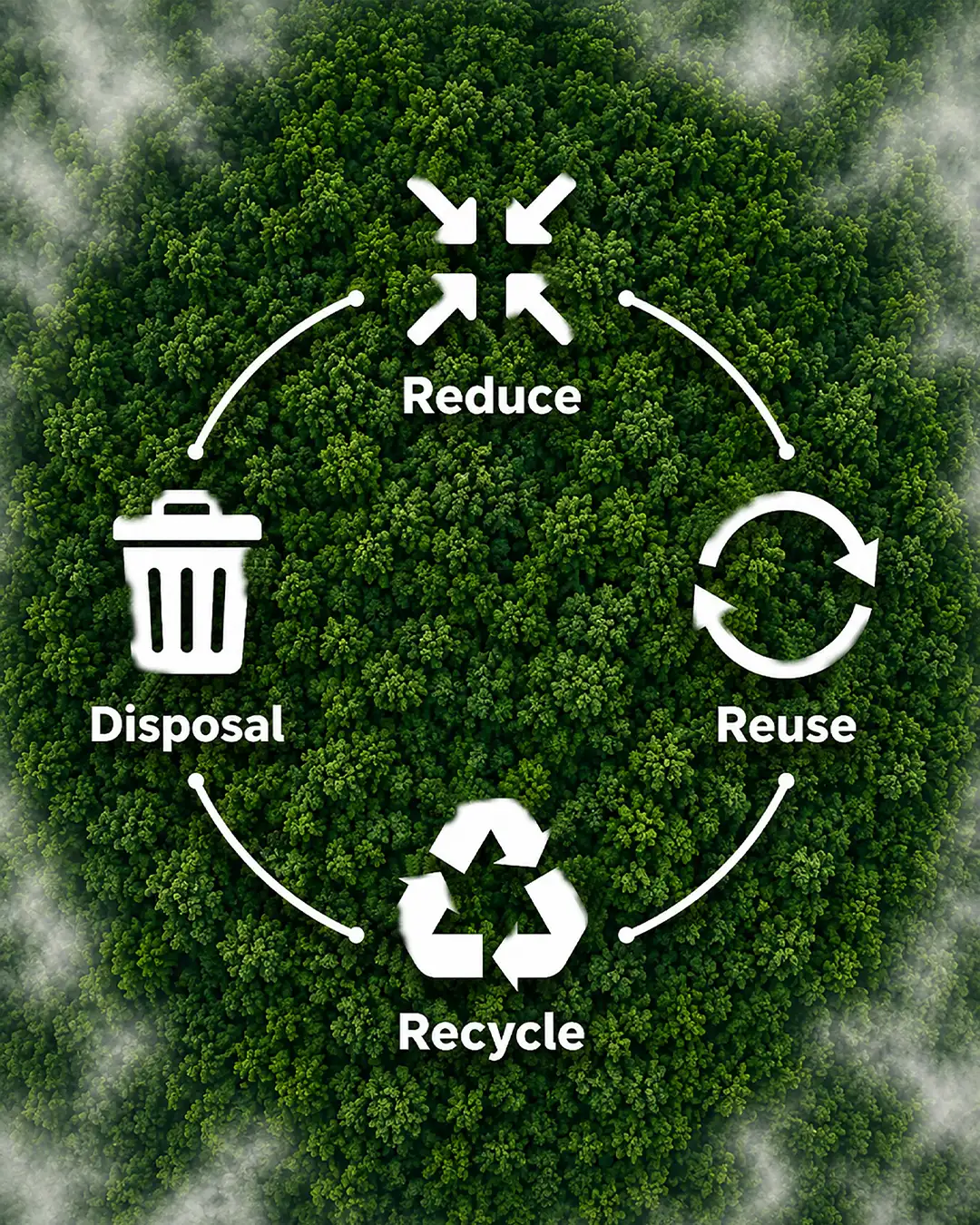
How Sustainability Takes Shape
Sustainability at Ester starts long before the final product. It is shaped in how materials are chosen, how processes are designed, and how every resource is valued.
We are guided on three principles: reuse, regeneration, and responsible impact. Our approach focuses on extending material life while reducing the intensity of every input. Over time, this has evolved into systems that deliver performance with purpose, across films, packaging, and textiles.



 Green Certifications


